Industry Update: Canton Fair Outcomes & New EU Packaging & Parcel Rules
Leave a message
1. The 140th Canton Fair concludes, with buyer numbers reaching a new historical high; green and customized solutions emerge as key focus areas
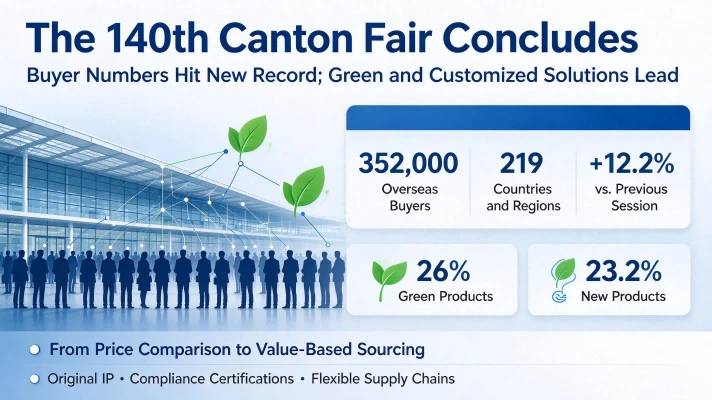
The 140th Canton Fair closed on 4 November, with a record 352,000 overseas buyers from 219 countries and regions attending, up 12.2% from the previous session. A notable structural change is that new products accounted for 23.2% of exhibits, while green products reached 26%, both setting historical records. Procurement logic is shifting from pure price comparison to greater emphasis on original IP, compliance certifications, and flexible supply chain capabilities. Meanwhile, demand from overseas buyers for environmentally friendly and sustainable materials has increased significantly. Equipment manufacturers are also moving from "selling individual products" to offering "products + total solutions," locking in long-term customers through full lifecycle services.
2. From 1 November, the EU will impose handling fees on non-EU parcels and mandate PID declarations
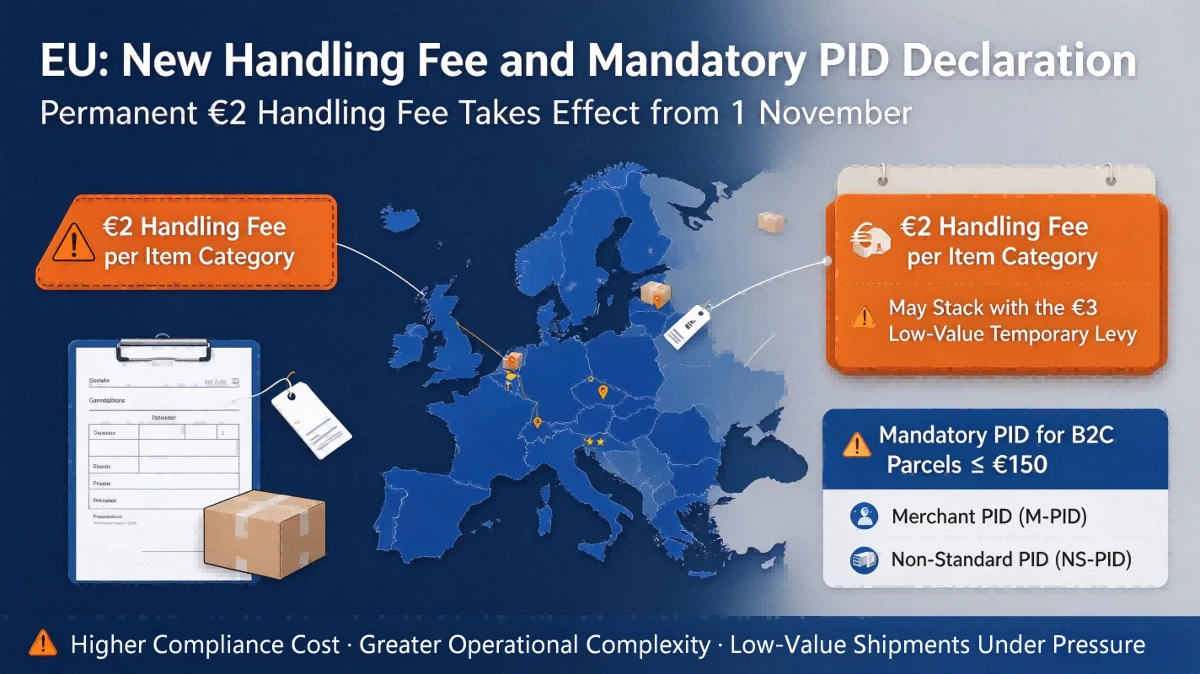
Cross-border e-commerce and small-parcel exporters need to be highly alert. Starting 1 November, the EU will apply a €2 handling fee per item category to parcels from outside the EU, regardless of the goods' value. This is a permanent charge and may stack with the temporary €3 levy on low-value parcels introduced in July. On the same date, mandatory Product Identifier (PID) reporting will also take effect. For all B2C parcels sent to EU consumers with an intrinsic value not exceeding €150, the Merchant PID (M-PID) or Manufacturer Non-Standard PID (NS-PID) must be reported at the item level. This will significantly increase compliance costs and operational complexity for low-value small-parcel exports.
3. EU PPWR clarification: existing reusable packaging does not need to be redesigned solely for new labeling
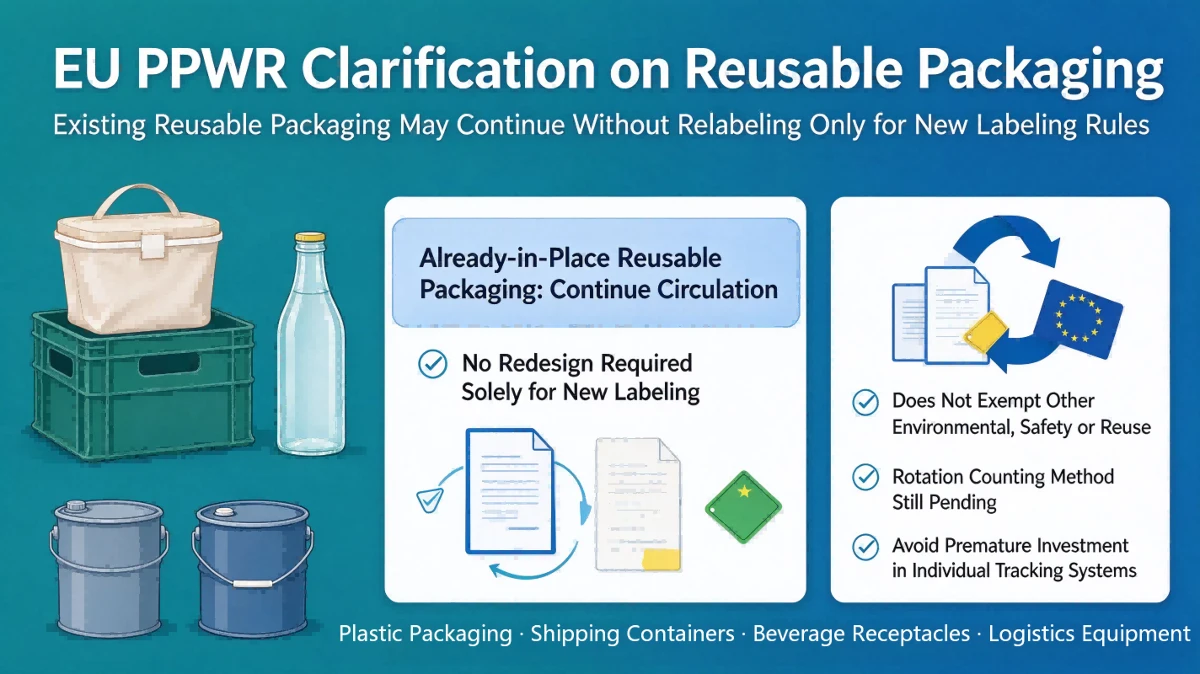
On 29 October, the European Commission addressed industry concerns under the EU Packaging and Packaging Waste Regulation (PPWR). Reusable packaging already placed on the market before the new labeling rules apply-such as returnable glass bottles, shipping crates, and beverage kegs-may continue to circulate and does not need to be redesigned solely to meet new labeling requirements. However, the Commission emphasized that this does not exempt such packaging from other environmental, safety, or reuse obligations. The methodology for counting rotations remains subject to further implementing rules, and companies should avoid premature investment in expensive individual tracking systems. For exporters of plastic packaging and logistics equipment to the EU, this clarification helps prevent unnecessary asset replacement, but ongoing monitoring of the implementing acts is still required.