

Is Disposable Masks More Of A Pollution Problem Than Plastic Bags?
Leave a message
Recent studies estimate that as many as 129 billion face masks are used globally every month, or 3 million every minute. Most of these are disposable masks made from plastic microfibers.
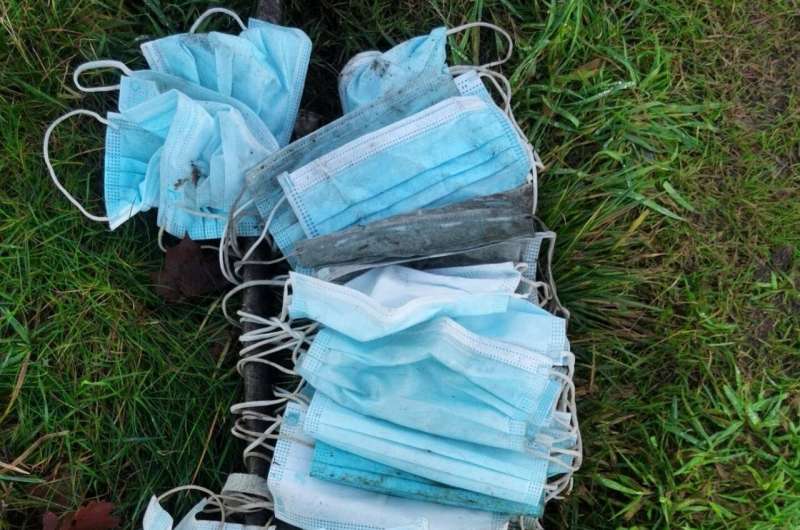
"As more and more reports of mishandled masks emerge, there is an urgent need for humanity to recognize this potential environmental threat and prevent it from becoming the next plastic problem," the researchers said in a commentary published in the scientific journal Frontiers in Environmental Science and Engineering.
The researchers are Elvis Genbo Xu, an environmental toxicology expert from the University of Southern Denmark, and Jason Ren, a professor of civil and environmental engineering at Princeton University.
Lack of guidelines for mask recycling
Disposable masks are a type of plastic that does not biodegrade easily and can break into smaller plastic particles, known as microplastics and nanoplastics, that are widespread in ecosystems.
Disposable masks are produced on a massive scale comparable to plastic bottles, estimated at 43 billion per month.
However, unlike plastic bottles (about 25 percent of which are recycled), there are no official guidelines for mask recycling, making it more likely that masks will be treated as solid waste, the researchers wrote.
More important than plastic bags
If not recycled like other plastic waste, disposable masks end up in the environment, freshwater systems, and oceans, where weathering produces large amounts of microplastics (less than 5mm) in a relatively short period of time (weeks) and further fragments into nanoplastics (less than 1 micron).
"A more serious new problem is that masks are made directly from microplastic fibres (about 1 to 10 microns thick). As masks break down in the environment, they may release more microplastics more easily and quickly than bulk plastics such as plastic bags, "the researchers wrote." A new generation of masks made from nanosized plastic fibers -- nanomasks -- may exacerbate this effect and add new sources of pollution."
The researchers stressed that they did not know how the masks enabled large numbers of plastic particles to be detected in the environment, as there was no data on mask degradation in nature.
"But we know that, like other plastic debris, disposable masks can also accumulate and release harmful chemicals and biological substances, such as bisphenol A, heavy metals, and disease-causing microorganisms. These may have indirect adverse effects on plants, animals and humans." Elvis Genbo Xu said.


